


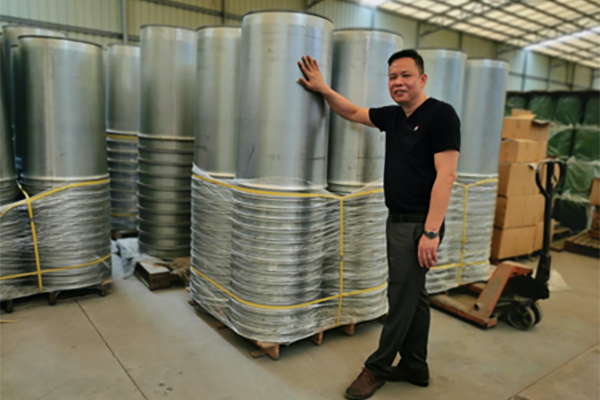
Applications of Steel Drums
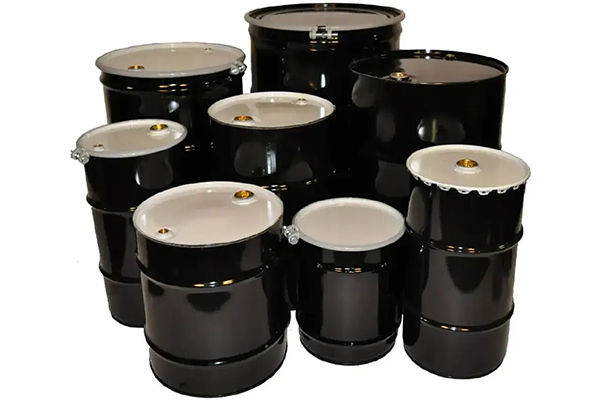
Steel drums rank among the most traditional containers, occupying a significant position within this category. Evolving from temporary storage vessels for contents, they now serve industrial packaging, sales packaging, and transport packaging. Functioning as continuous flow containers from production through distribution to consumption, they have become a means for long-term preservation of contents. It can be said that steel drums have brought about considerable transformation and progress in human work and daily life.
I. Though their application spans merely a century, steel drums have become fundamental to modernised production across industrial and agricultural sectors, owing to the development of the contemporary steel industry. They are extensively employed in industrial product packaging, transport packaging, and sales packaging, establishing themselves as one of the primary packaging materials. Currently, among various packaging materials, Japan and European nations utilise steel for approximately 14% of their packaging needs, ranking third after paper and plastic packaging. In the United States, steel consumption for packaging exceeds that of plastic, occupying the second position. In China, steel accounts for roughly 8% of total packaging materials, second only to plastic. Amidst the rapid advancement of packaging technologies today, new materials continually emerge, leading to intense competition. While steel drums have been partially replaced by plastics or composite materials in certain applications, steel retains its vitality due to its exceptional comprehensive properties and abundant resources, evolving into increasingly diverse forms of application. It has particularly found its niche in the composite materials sector, serving as the primary barrier layer within these structures. The successful application of metallised composite films stands as a prime example of this.
II. Performance Characteristics of Steel Drums
Despite having only a century-long history of application, steel drums have developed rapidly, with numerous varieties now widely employed in industrial product packaging, transport packaging, and sales packaging. This widespread adoption stems primarily from the following performance characteristics:
1. Superior mechanical properties and high strength enable steel drums to be manufactured as thin-walled, high-pressure-resistant containers that are resistant to damage. This provides reliable assurance for the safety of packaged products and facilitates storage, transportation, handling, and usage.
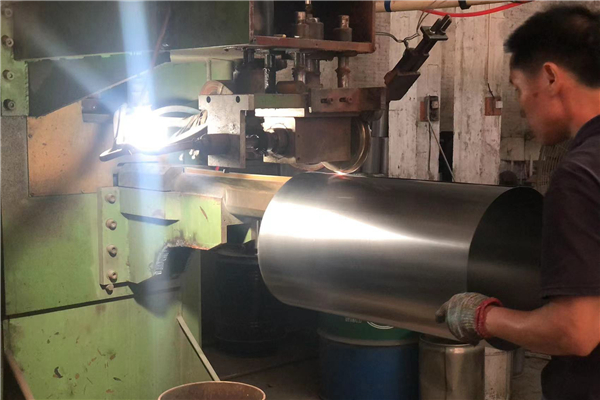
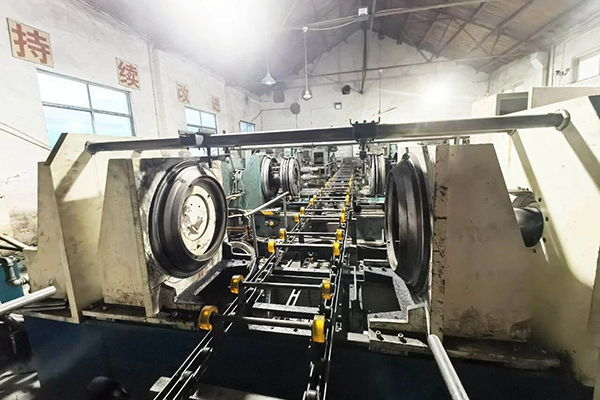
2. Steel drums possess excellent workability and mature processing techniques, enabling continuous and automated production. Their remarkable ductility and strength allow rolling into sheets and foils of various thicknesses. These sheets can be stamped, rolled, drawn, and welded into packaging containers of diverse shapes and sizes.
3. Steel drums possess outstanding comprehensive protective properties. Steel exhibits minimal water vapour permeability and is completely opaque, effectively shielding against harmful ultraviolet radiation. Its gas barrier properties, moisture resistance, light-blocking capabilities, and quality preservation significantly surpass those of plastics, paper, and other materials. Consequently, steel drums maintain product integrity over extended periods, a critical advantage particularly for food packaging.
4. Steel drums possess a distinctive metallic lustre and are readily printable for decorative purposes, lending products an elegant and luxurious appearance that enhances market appeal.
5. Steel drums are abundant in resources, with relatively low energy consumption and production costs. Furthermore, their recyclability makes them an ideal environmentally friendly option from a sustainability perspective.
Despite these advantages, steel drums exhibit certain limitations. Primarily: they lack chemical stability and corrosion resistance compared to plastics and glass, with ordinary steel being particularly susceptible to rust. Consequently, steel drums often require an additional rust-preventative coating to shield against external corrosion and contamination from packaged goods. This also prevents harmful substances within the steel itself from contaminating the contents. For instance, steel contains varying levels of heavy metal ions such as Pb (lead) and Sn (tin), which can react with packaged items—particularly foodstuffs. Such reactions not only taint the food but also pose significant health risks to humans due to the toxicity of these heavy metal ions.